Learning Outcomes
Recent advances in basic science, especially in biochemistry and molecular biology, have been based on the development of new methodologies and techniques. This course introduces basic and advanced experimental methods that are broadly used for the structural and functional characterization of chemical biomolecules. The primary goal is the understanding of the theoretical background and application of many methods that are applied in biochemistry, biotechnology, and in cellular and molecular biology, but most importantly, the training on the design and execution of experimental protocols. Based on oral presentations, the students are practicing the design of experimental protocols to decipher certain research subjects of biochemical and molecular proposals.
Course Content
- PCR Methodologies
- Quantitative techniques of protein analysis–Centrifugation
- Design of protein-expression vectors generation
- Immunochemical methods of analysis
- Chromatographic methods of protein analysis
- Protein Electrophoresis and Western Blotting
- Methods of DNA, RNA electrophoresis, blotting, and hybridization
- Circular dichroism, dynamic light scattering, and NMR analysis of biomolecules
- Principles of crystallographic analysis of biomolecules
- Flow cytometry-Principle and applications
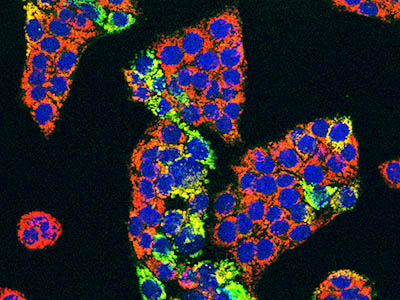
- Confocal Microscopy: Principles and Applications
- Microarrays-Principle and applications
- Molecularly Imprinted Polymers and Electrospinning
- Mechanical and thermal analysis of biopolymers
- Methods of characterization of biomolecule interactions
- Experimental protocol design
Student Evaluation
Student evaluation is based on their achievement of individual work (30%) and the written exam in the theoretical part of the course during the examination period (70%). The written exam includes:
- Multiple choice questions with graded difficulty (70 points)
- critical questions for solving problems on real experimental data (30 points)
For students with learning disabilities, there is a provision for a mixed examination method in all parts of the course. The total number of correct answers corresponds to 100 points, which are reduced to a grade of 10. Based on this reduction, the grade of each student in the theoretical exam of the course is calculated. This grade corresponds to 70% of the total grade of the course.
Recommended Bibliography
- Principles and techniques of Biochemistry and Molecular Biology, 7th edition, edited by Keith Wilson and John Walker, electronic source
- Laboratory techniques in biochemistry and molecular biology, Elsevier, ScienceDirect, electronic source
- ΣΥΓΧΡΟΝΗ ΠΕΙΡΑΜΑΤΙΚΗ ΒΙΟΧΗΜΕΙΑ, RodneyBoyer, Μετάφραση Λιδάκης -Σημαντήρης, Εκδόσεις Κωσταράκης, έκδοση 2014
- Basic Methods for the Biochemical Lab, Martin Holtzhauer, ηλεκτρονική έκδοση, Εκδόσεις Springer and
- Surface Plasmon Resonance Based Sensors, ηλεκτρονική έκδοση, Εκδόσεις, Springer
- Αρχές συνεστιακής μικροσκοπίας και εφαρμογές-Μέθοδοι χαρακτηρισμού αλληλεπίδρασης βιομορίων, Ψαρρά Άννα-Μαρία, Παν/μιο Θεσσαλίας, ηλεκτρονική έκδοση
Related scientific journals
- Analytical Biochemistry
- Analytical And Bioanalytical Chemistry
- Biology Methods & Protocols
- Biochemistry Journal
- BBA-Biochimica et Biophysica Acta
- Journal of Biological Chemistry
- Archives of Biochemistry and Biophysics
- International journal of biochemistry and cell biology
- Cell
- Journal of Cell Science
- Science Reports